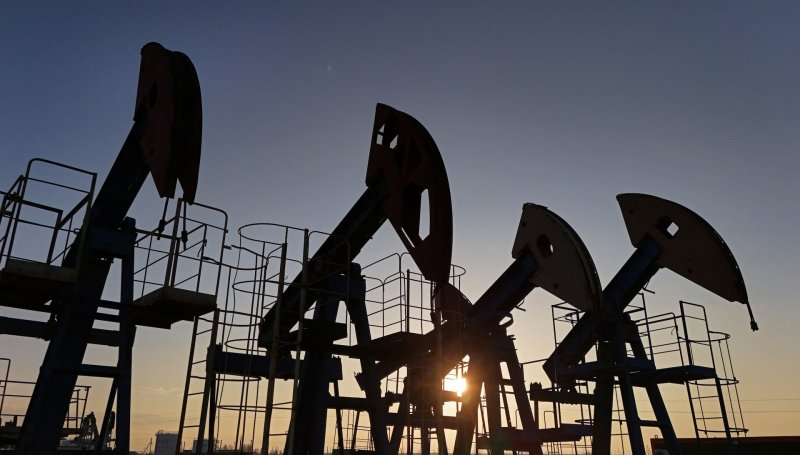

Oil prices declined as easing tensions in the Middle East lowered the perceived risk of near-term supply disruptions.
Brent crude fell toward $67 a barrel after dropping almost 4% last week, while West Texas Intermediate traded near $63, News.Az reports, citing Bloomberg.
The pullback followed talks between Iran and the United States held on Friday in Oman, aimed at reducing tensions over Tehran’s nuclear program. Iran described the discussions as “a step forward.”
With Washington having built up military forces in the region, U.S. President Donald Trump said another meeting would take place early this week. Trump is also scheduled to meet Israeli Prime Minister Benjamin Netanyahu on Feb. 11, while preparing tariffs targeting countries that do business with Tehran.
Crude prices have risen since the start of 2026 despite widespread concerns about a looming supply glut, supported by geopolitical tensions and disruptions to some flows, including shipments from Kazakhstan. Still, oil retreated last week as signs of progress emerged in U.S.-Iran negotiations.
Traders were also closely watching flows to India. Trump has said New Delhi agreed to stop importing Russian crude as part of a trade deal. However, India has not directly confirmed such a commitment, with officials stressing that energy security remains the government’s top priority.
“If India stops Russian oil purchases following the U.S.-India trade deal, we would need to see Russian oil discounts widening in an effort to find alternative buyers,” said Warren Patterson, head of commodities strategy at ING Groep NV. Failure to secure other buyers would ultimately tighten the global supply balance, he added.
Markets are set to receive further signals on the outlook this week, with updated reports expected from OPEC, the official U.S. forecaster, and the International Energy Agency. International Energy Week in London will also feature industry leaders, including Russell Hardy, chief executive officer of Vitol Group.
Elsewhere, Cuba drew attention after the U.S. increased pressure on Havana following its involvement in Venezuela in January. With fuel shipments effectively cut off, the Cuban government warned international airlines that they will be unable to refuel at the capital’s main airport for the next month.