
A powerful scene from the blockbuster film “Dhurandhar” has gone viral on social media, reigniting debate over the Pakistan Army’s alleged mistreatment of the Baloch community.
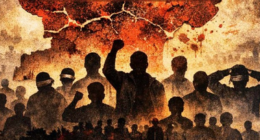
In the scene, Ranveer Singh’s character witnesses the mass burial of children in Balochistan, where a Baloch leader reveals that the ISI allegedly poisoned the school’s water supply.
The scene, along with the movie, has already sparked an active debate about the Pakistani forces’ atrocities in Balochistan. The movie also prominently touches upon the ongoing struggle of the Baloch people for an independent nation.
On social media, some users praised the movie for raising the plight of the community in Pakistan. “And this is the reason we Baloch love this movie, although we expect a lot more from Bollywood to highlight Baloch cause and pakistani atrocities in Balochistan,” one user commented.
But is the scene really based on a real incident?
While the movie has shown a fictionalised depiction of the Balochistan struggle, the sequence seems to have drawn from actual news reports about claims that Pakistani forces mixed chemicals to poison the water supply in some areas in Baloch.
In an old India Today report from 2016, a Balochistan activist claimed that the Pakistani army used “certain chemicals to poison their water supply and punish them.”
The action was allegedly triggered by Prime Minister Narendra Modi’s mention of the Baloch freedom struggle in his Independence Day speech the same year, signalling a significant shift in policy on Pakistan.
The activist alleged that as many as 50 civilians were killed in the Dera Bugti district while over 150 Balochs were abducted.
In 2017, The Sunday Guardian also quoted locals as saying that the Pakistan army is indiscriminately using “chemical weapons” in Khyber Pakhtunkhwa as well as Balochistan.
Although the events shown in “Dhurandhar” pre-date these reports, the storyline appears to be loosely inspired by these documented claims.
The Baloch struggle in Pakistan is centred on demands for autonomy and resistance to what locals call systemic oppression by the Pakistan army.
Rights groups have repeatedly accused Pakistani forces of enforced disappearances, extrajudicial killings and heavy-handed crackdowns in the region.