
Pakistan’s top military leadership is scrambling to assess its options as escalating tensions between the United States and Iran threaten to push Islamabad into a difficult geopolitical corner, senior security sources told CNN-News18.
Amid fears of a wider regional confrontation, Pakistan’s Field Marshal and Army Chief Asim Munir convened an emergency meeting of the country’s top security brass to review the unfolding crisis.
The high-level meeting was attended by ISI chief and National Security Adviser General Asim Malik, Southern Commander Lt General Rahat Naseem, the Director General of Military Intelligence, the Chief of General Staff to the COAS, the ISI’s Director General (Analysis) and other senior generals.
According to sources, the meeting focused on the implications of a possible US-Iran confrontation for Pakistan, which is already grappling with multiple security challenges.
Officials flagged concerns over the long and sensitive Pakistan-Iran border, warning that Islamabad cannot afford another volatile frontier at a time when the Durand Line with Afghanistan remains tense and hostile.
The military leadership also discussed the risks arising from Pakistan’s close strategic relationship with the United States, particularly under the Trump administration.
Will US Seek Access To Pakistani Bases?
Sources said a key concern was the possibility that Washington could seek access to Pakistani airspace or military bases in the event of strikes on Iran, a demand that could put Islamabad in a precarious position domestically and regionally.
Another major worry, according to intelligence inputs reviewed at the meeting, is internal unrest.
Pakistan has a sizeable Shia population, estimated at nearly 30 per cent, many of whom are seen as sympathetic to Iran and strongly opposed to the US and Israel.
Any attack on Iran or a potential regime-change scenario, officials fear, could trigger widespread protests across Pakistan and create additional pressure along the Pak-Iran border due to refugee inflows.
Sources said Field Marshal Munir directed senior commanders and the National Security Adviser to remain on high alert and closely monitor developments.
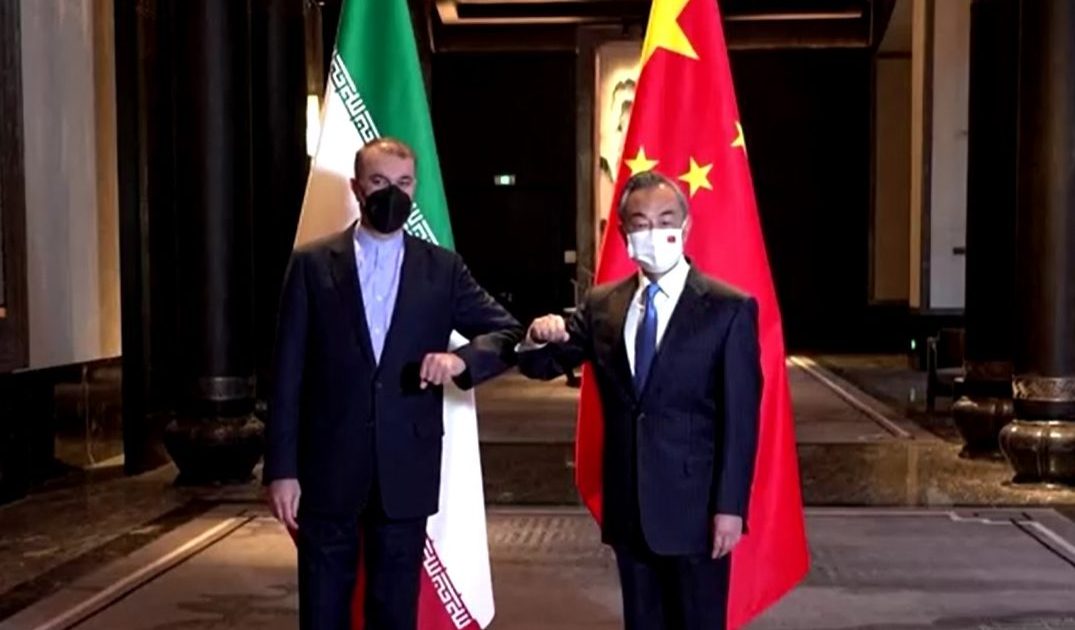
The ISI chief was also tasked with strengthening diplomatic and security-level contacts with counterparts in Iran, Turkey, Qatar, the UAE, Saudi Arabia and the United States to assess the evolving situation and explore avenues for de-escalation.
Intelligence assessments shared with the leadership suggest that Pakistan, along with Saudi Arabia, Qatar and Turkey, has conveyed concerns to Washington that a military strike on Iran could destabilise the entire region.
However, officials acknowledge that if the Trump administration proceeds with an attack and presses Pakistan for logistical support, Islamabad would face severe strategic and political consequences.
Pakistan Hosts Religious Delegation
As it weighs these external pressures, Pakistan’s military has also moved to consolidate domestic narratives on national security.