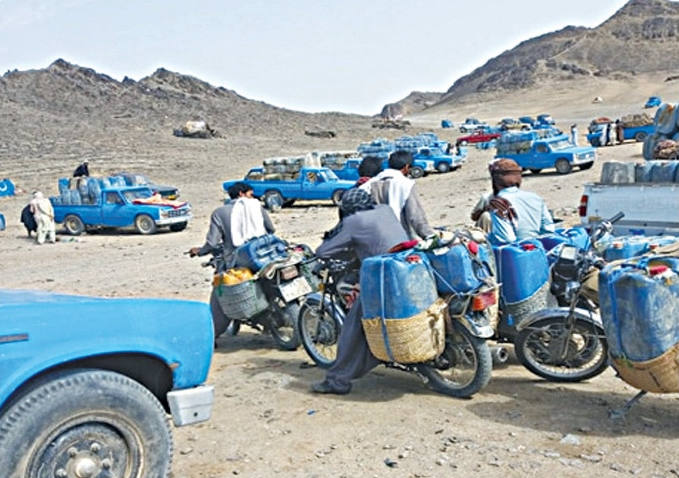
In a grim report released today, the human rights organization “Baloch Activists Campaign” has highlighted a staggering toll on Baloch fuel carriers over the past seven years, with at least 1,010 individuals killed or injured due to violent encounters with Iranian military forces in Iranian Occupied Balochistan (IOB) and other Baloch regions.
The report coincides with the observance of the 22nd of February as “Roz-e-Sokhtbar – the Fuel Carriers Day,” a date marked by the Baloch community to remember the victims of violence against fuel carriers.
The campaign’s findings reveal that the primary motivation for these individuals to engage in fuel delivery is economic necessity, with widespread poverty and high unemployment driving many Baloch families to take on this perilous line of work. Fuel trucking, the transportation of fuel across the GoldSmid Line “Iran-Pakistan border”, has become one of the few avenues available for livelihood among local residents.
“The violence fuel carriers have sharply escalated, leading to increased fatalities and injuries in recent years,” the report states. There are accounts of Iranian military personnel firing directly at fuel tankers and pursuing them along treacherous roads, actions that have led to overturned vehicles and tragic outcomes.
The “Baloch Activists Campaign” stresses that the actual number of casualties is likely higher than reported, as many families are hesitant to share information or seek legality due to fear of retribution and security repercussions. This environment of fear complicates efforts to obtain accurate statistics on the issue.
The report outlines that the suppression of fuel carriers has not only heightened loss of life but also aggravated the ongoing livelihood crisis in the Baloch regions. The lack of adequate economic infrastructure, coupled with significant unemployment and low levels of investment, means that fuel delivery remains the sole source of income for many young Baloch individuals.
“We have repeatedly warned that the violent suppression of fuel sellers without providing alternative economic solutions can lead to heightened social discontent and unrest,” the campaign’s representatives stated.
Notably, the 22nd of February also marks a sombre anniversary for the Baloch community; on this day in 2009, at least 37 individuals were killed or injured when military forces opened fire on fuel carriers at the Shamsar Saravan border. This event continues to resonate as a symbol of the ongoing struggles faced by those in the fuel delivery trade.
As the Baloch community commemorates the ‘Fuel Carriers Day’, the report calls for urgent international attention to the plight of fuel carriers and the broader socioeconomic issues afflicting the region. Advocates urge for collaborative efforts to seek sustainable economic alternatives that can alleviate the leading causes of violence and poverty in Balochistan.